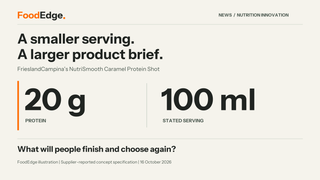
FrieslandCampina sets out small-portion protein concepts for GLP-1 users
A 20 g protein shot in 100 ml gives R&D teams a concrete brief. The supplier specifications still need a comparison with what intended users finish and choose again.
Find the reporting, analysis and practical guides that matter to your work.
News · Guides & tools · How our formats work
Publications in date order, newest first.
A 20 g protein shot in 100 ml gives R&D teams a concrete brief. The supplier specifications still need a comparison with what intended users finish and choose again.
The 13 October publication describes a food-supplement use. Keep the material, process and intended use attached to the finding.
Match a pitch claim to its actual evidence. Two worked exercises help food biotech teams show progress without implying proof they do not have.
Free account: turn a proposed spending change into a commitment record with cash timing, evidence, dependencies and a review trigger.
The general effective date is 14 December 2026. A dairy-specific objection provision means product teams still need to check which amendment applies.
ECOFERM sets a research direction. A commercial comparison still needs campaign reliability, recovery, quality and a clear cost boundary.
Purchase composition, intake and product use answer different questions. Use Danish receipt research to frame the next test.
A new human-AI food study illustrates why the method comparison and product comparison belong on separate lines in an R&D trial.
Choose the missing evidence layer, rewrite the product brief and define what would redirect the concept before formulation.
Free account: build a comparison brief for one AI formulation trial, with references, acceptance rules and the next decision gate.
Turn a process announcement into a diligence request covering campaign stability, accepted output, cost boundaries and qualification.
A practical reporting brief on the Tac and Kuhl preprint, with claim boundaries, interview questions and a headline test.