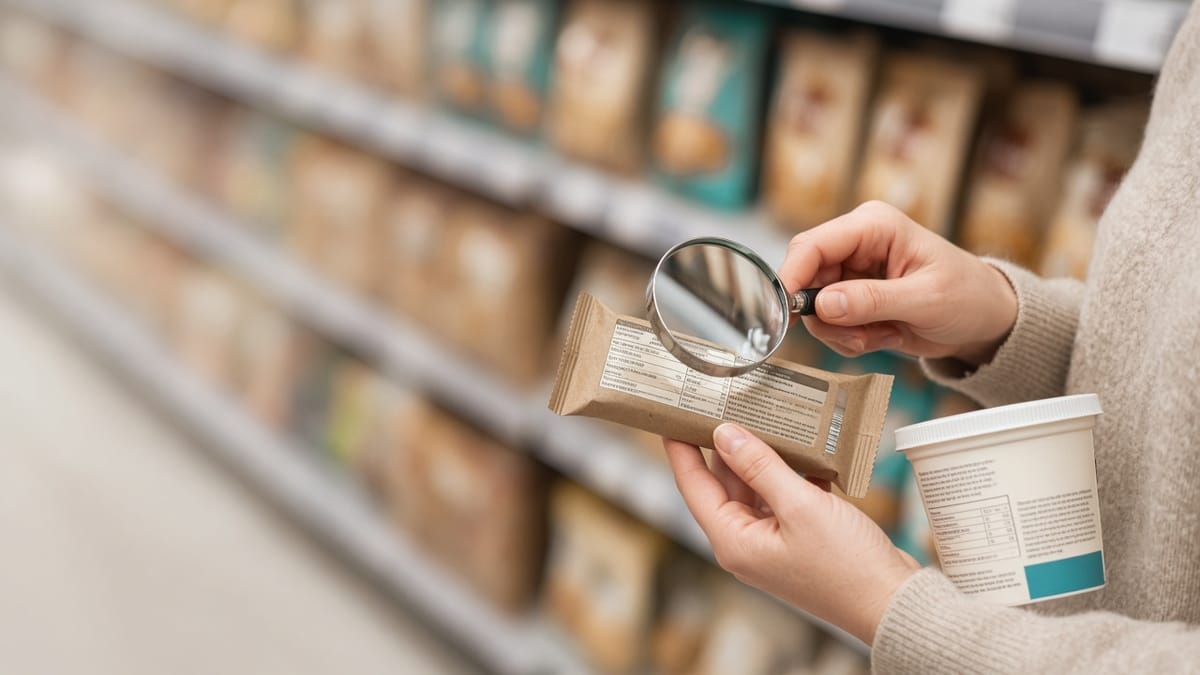
Shoppers in the US are checking protein claims more closely as demand for high-protein foods grows, Reuters reported on 23 October. The report draws on interviews with consumers and company executives. Some shoppers question whether products deliver as much protein as the front of the pack implies; others object to added sugar or long additive lists that undercut the nutritional case.
At a glance
- 11%more that GLP-1 users said they would spend on high-protein foods (BCG survey, August)
- 25%of NielsenIQ respondents use scanning apps to check nutrition, up from about 17%
- 65 g vs 27 gserving basis of a protein granola against the brand’s regular granola
- 12% / 20%share of energy from protein needed in the EU for “source of” / “high” protein claims
Survey figures as cited by Reuters, 23 October 2026. EU thresholds: Regulation (EC) No 1924/2006.
Reuters links the demand partly to GLP-1 medicines. It cites an August Boston Consulting Group survey in which GLP-1 users said they would spend 11% more on high-protein foods than before starting treatment. A NielsenIQ report cited in the same article found that 25% of its respondents use scanning apps to check nutritional value, up from around 17% the previous year. A third of its more than 1,000 respondents said the food industry was overhyping protein.
Where the serving size does the work
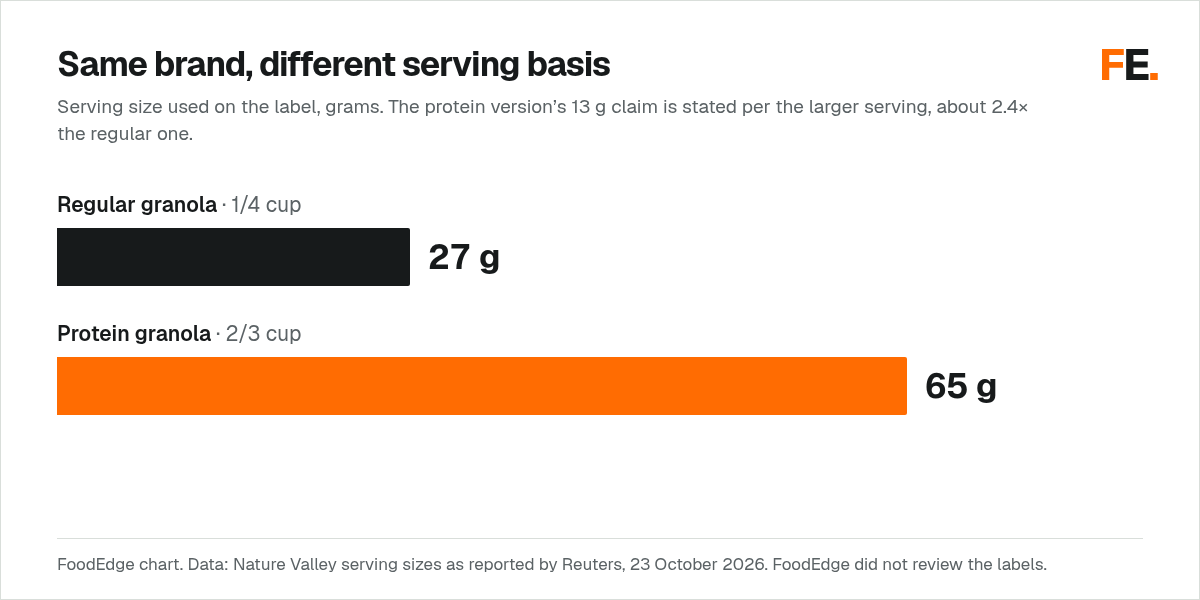
Reuters found several brands advertising protein content on the basis of a larger portion than the regular version of the same product uses, including in pasta, oatmeal and granola. Its example is a Nature Valley protein granola labelled with 13 g of protein per 2/3 cup (65 g), against a 1/4 cup (27 g) serving for the regular granola. General Mills told Reuters it treats the regular version as a snack and the protein version as a snack or a more complete cereal meal. Jonathan Bonnet, a Stanford professor quoted in the report, said the product's protein-to-calorie ratio indicated a “very low amount of protein overall”.
The same question has reached court. Danone filed a false advertising lawsuit against Chobani in June, accusing it of inflating protein claims on labels by using non-standard serving sizes. Chobani told Reuters its labelling is accurate and transparent. The case is unresolved, and FoodEdge has not assessed either company's labels.
“A very low amount of protein overall” — Jonathan Bonnet, Stanford professor, describing the protein granola’s protein-to-calorie ratio to Reuters
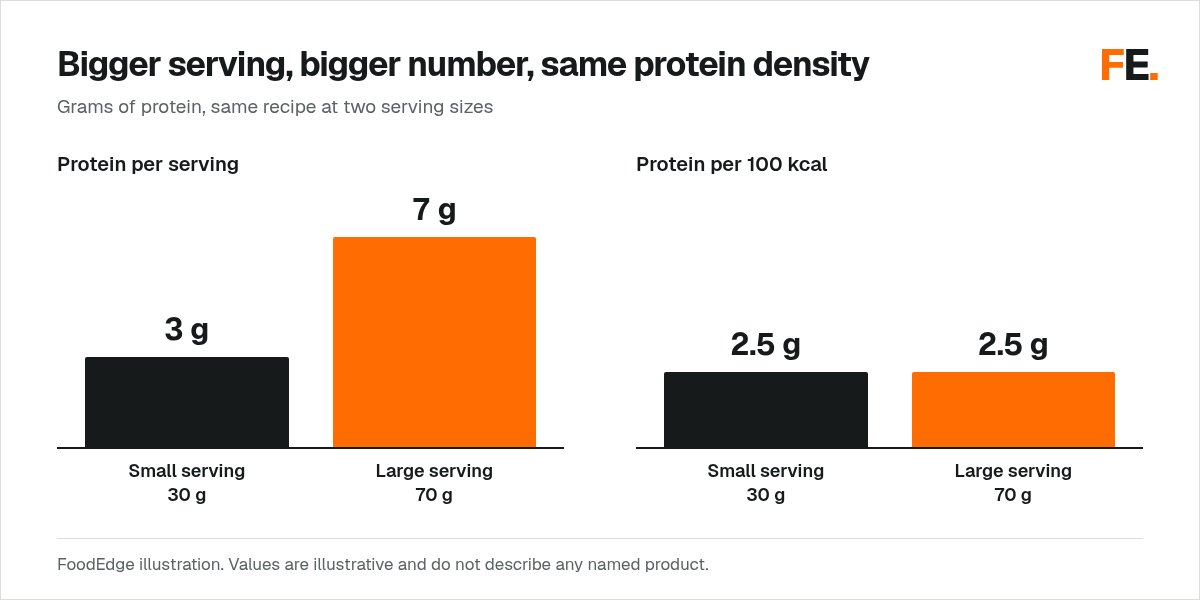
Rules differ by market. In the EU, Regulation (EC) No 1924/2006 permits “source of protein” only where protein provides at least 12% of the food's energy, and “high protein” at 20% or more. A larger portion does not change that share. In the US, 21 CFR 101.9 ties label servings to reference amounts and requires a percent Daily Value based on quality-corrected protein whenever a protein claim is made.
FoodEdge view: make the protein number survive three tests
Our reading is that the gram figure on the front of the pack is becoming the weakest part of a protein proposition. A brief that can withstand a label-reading customer needs three numbers that agree: protein per 100 kcal, which is close to how the EU claim works; quality-corrected protein in the portion the product is designed around; and the amount intended users actually finish. For people using GLP-1 medicines, who may eat smaller portions, a per-serving figure based on a portion they do not finish is the most likely to disappoint.
A team can still test it directly: show intended users the full label, not just the claim, and measure whether they choose the product again. If the product only works with the protein number at the centre of the pack, the formulation brief is probably not finished.
Checklist: three numbers to agree before a protein claim
- Protein per 100 kcal: close to how the EU claim works (at least 12% of energy for “source of”, 20% for “high” protein).
- Quality-corrected protein in the portion the product is designed around, as the US percent Daily Value requires when a claim is made.
- The amount intended users actually finish, especially people on GLP-1 medicines who may eat smaller portions.
Sources and reporting
- Reuters: Weight-loss drugs fuel protein boom, but with more consumer scrutiny, 23 October 2026
- European Commission: Nutrition claims (Regulation (EC) No 1924/2006, Annex)
- eCFR: 21 CFR 101.9, Nutrition labeling of food
Reporting note: Desk report on Reuters’ 23 October article and the EU and US labelling texts linked above. No product labels, laboratory analyses or court filings were reviewed by FoodEdge.
AI tools supported source research and drafting during the editorial process.
 FoodEdge Editorial