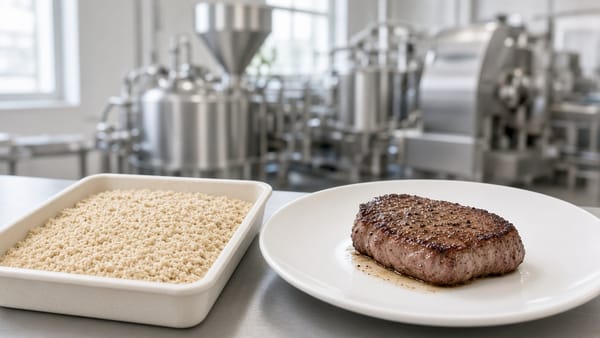
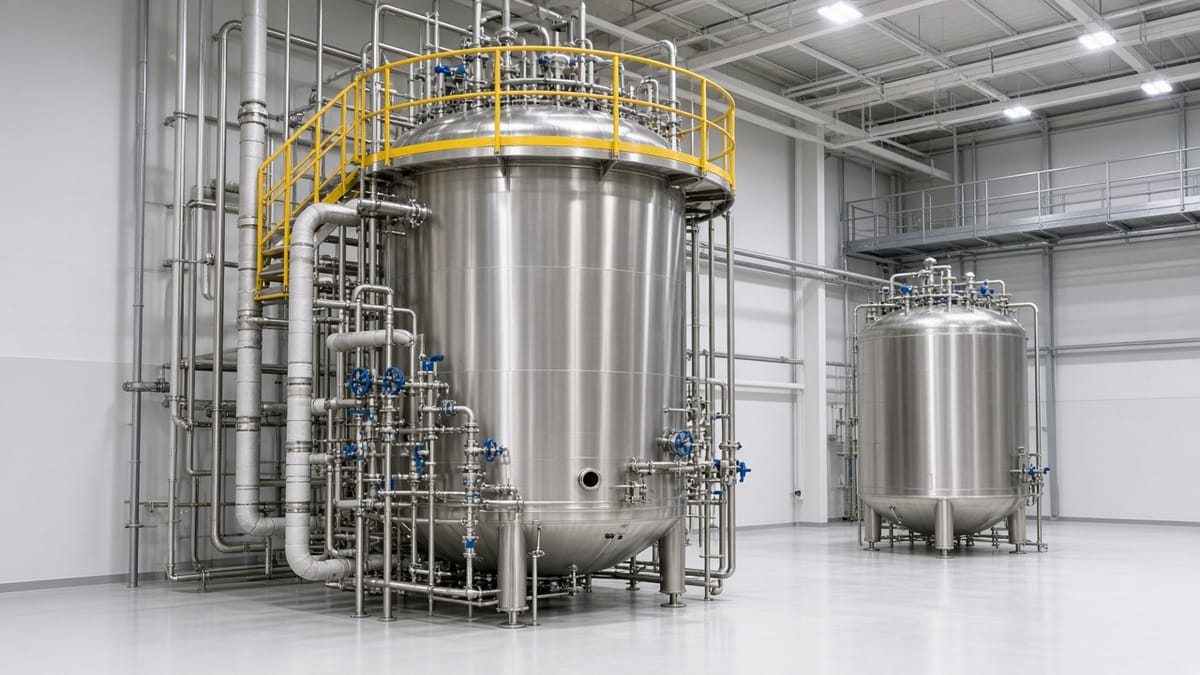
UK cultivated pet-food company Meatly has moved into Grapht Works, Imperial College London’s pilot and advanced manufacturing site in North Acton, Imperial said on 2 November. The site is where Meatly plans its first production runs in 2027, in a facility built around a 20,000-litre bioreactor that the company describes as the largest of its kind in Europe. Meatly sells cultivated chicken for pet food, and its chief executive says the vessel is the scale at which it has to prove its unit economics.
At a glance
- 20,000 Llargest vessel planned for the site, alongside a 2,000-litre bioreactor
- £3–4mcapital cost of the facility, according to chief executive Owen Ensor
- £0.22per litre: the cost Meatly reported in 2024 for its protein-free culture medium
- £10/kgproduction cost Ensor says a mass-market pet-food ingredient has to beat
Imperial College London, 2 November 2026; Meatly release, 7 May 2026; AgFunderNews interview, 28 September 2026.
What has moved
Grapht Works is part of Imperial’s Old Oak Innovation Cluster within WestTech London and offers industrial space for science companies moving from research into production. The move is paid for by the £10.4 million Series A that Meatly announced on 7 May, led by new investors Oyster Bay Venture Capital, Clean Growth Fund and JamJar Investments. Agronomics and Pets at Home put in the earlier £7 million, bringing total funding to £17.4 million. Meatly received UK regulatory authorisation in 2024 and began selling in 2025; Protein Production Technology International describes that launch as a limited release of Chick Bites dog treats from The Pack, combining plant ingredients with cultivated chicken and sold through Pets at Home.
Owen Ensor told AgFunderNews in September that the site will run a 2,000-litre and a 20,000-litre vessel, and that the facility will cost about £3–4 million in capital. He said the aim is to prove commercially viable unit economics at 20,000 litres within roughly two years. If that works, he plans to add more 20,000-litre vessels and to fund them with debt, project finance or a joint venture with a pet-food manufacturer, keeping equity away from industrial plant.
The cost line Meatly has drawn
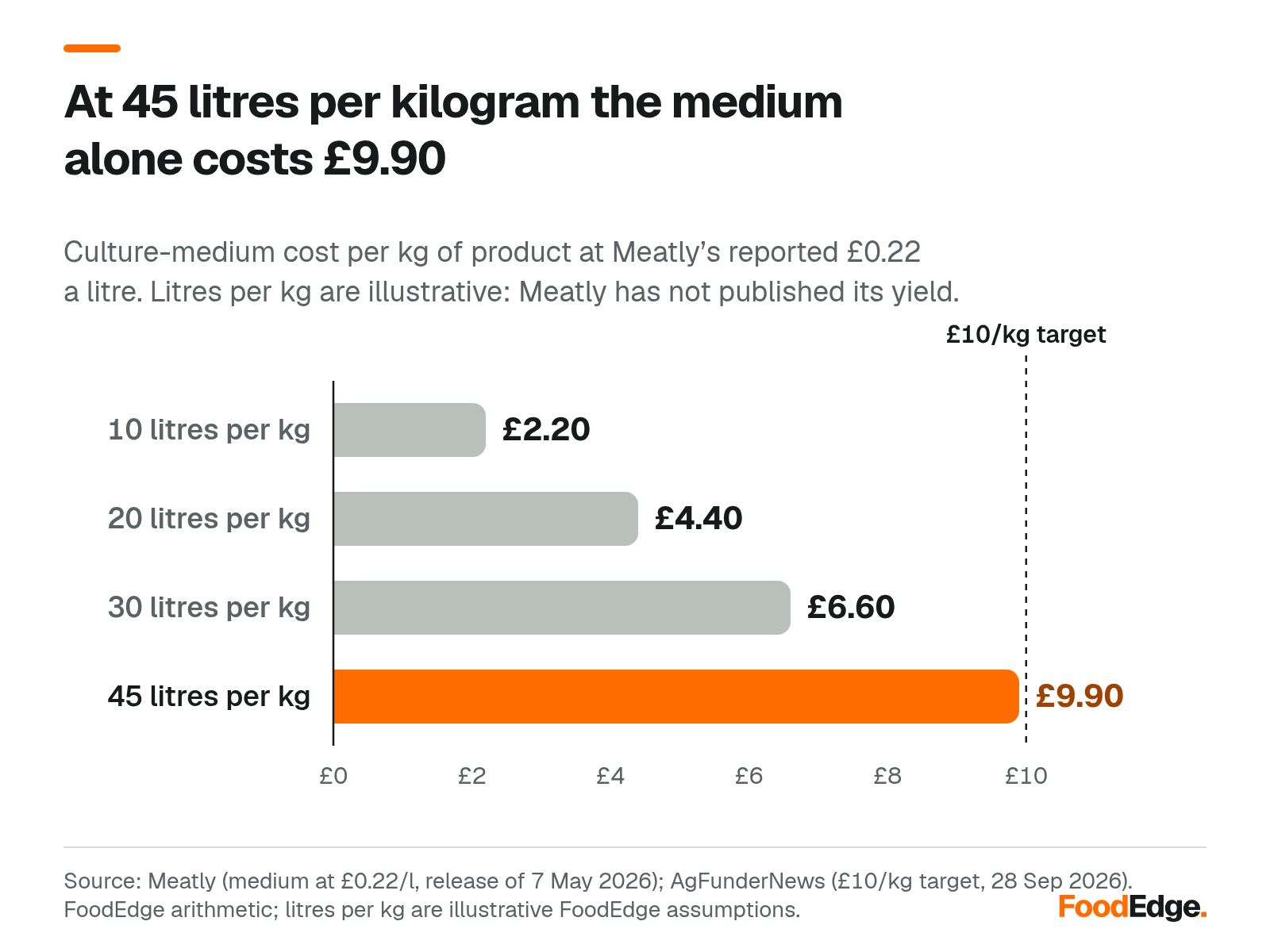
Meatly’s published cost work covers two inputs. In 2024 it reported a chemically defined, protein-free medium at £0.22 per litre, and in 2025 it said it had cut bioreactor costs by about ten times by building its own. Ensor’s target for the finished ingredient is below £10 per kilogram, a level he says premium pet food can absorb. He has not published how many litres of medium a kilogram of product needs. The chart shows why that ratio matters: the medium cost per kilogram scales directly with it, before labour, energy, depreciation and downstream processing are added.
On the capital side, £3–4 million for a site with 22,000 litres of combined vessel volume works out at roughly £140–180 per litre, by FoodEdge arithmetic on Ensor’s figures. Ensor contrasts that with the $30–40 million and $300–400 million he says some first-wave cultivated meat companies spent on facilities. He also cites a 24-month shelf life for the product and points to Vow in Australia as a company that has already run 20,000-litre vessels.
“Running at 20,000-liters is the largest scale we ever need to go to. And if we do it in one vessel, then we can do it in numerous 20,000-L vessels running simultaneously.”
Owen Ensor, chief executive of Meatly, to AgFunderNews
FoodEdge view: the yield per litre is the number to ask for
Our reading is that Meatly has published the cheap half of the equation. A £0.22 medium and a low-capex site are necessary, and the £10 target only holds if each litre of medium produces enough biomass, batch after batch, under sterile conditions. Ensor names consistency and sterility as open work, which places the risk in operations at scale.
Pet food gives the company a market where an authorised product already sells and a retailer that is also an investor. The 2027 runs will be worth reading for three disclosures: kilograms per batch, batches per month without contamination, and the share of output under contract.
Checklist: reading a cultivated meat scale-up claim
- Ask for litres of medium per kilogram of finished product, measured at the largest vessel run so far.
- Separate working volume from nameplate volume when comparing facilities by litres.
- Request the contamination and batch-failure rate over a defined run of consecutive batches.
- Check which market the authorisation covers; a UK pet-food approval says nothing about human food or the EU.
Sources and reporting
- Imperial College London: Meatly moves into Imperial’s Grapht Works ahead of 2027 production facility opening, 2 November 2026
- Meatly: Meatly secures £10.4m Series A to build pilot facility, 7 May 2026
- AgFunderNews: Meatly bets on 20,000-liter scale to prove cultivated meat economics, 28 September 2026
- Protein Production Technology International: Meatly targets 2027 production at new London cultivated meat facility, 2 November 2026
Reporting note: Desk report on Imperial’s 2 November announcement, Meatly’s funding release and a published interview with its chief executive. FoodEdge has not visited the site or seen production data. Per-litre and per-kilogram figures marked as FoodEdge arithmetic are calculations on the cited numbers.
AI tools supported source research and drafting during the editorial process.